
1 What is Ethnography and Ethnographic Research?
1.1 Definition
Ethnography systematically studies human societies and cultures through prolonged immersion and direct engagement. It explores how people construct meaning, maintain relationships, and navigate lived realities. Unlike approaches based primarily on standardized instruments, ethnography prioritizes contextuality and emic perspectives—the meanings, values, attitudes, and interpretations through which people understand their worlds. This openness enables researchers to identify tensions between what people say and do, revealing informal norms and unspoken social processes often overlooked by more detached research designs. It is particularly effective for studying marginalized or hard-to-reach populations and forms of knowledge frequently neglected by mainstream institutions.
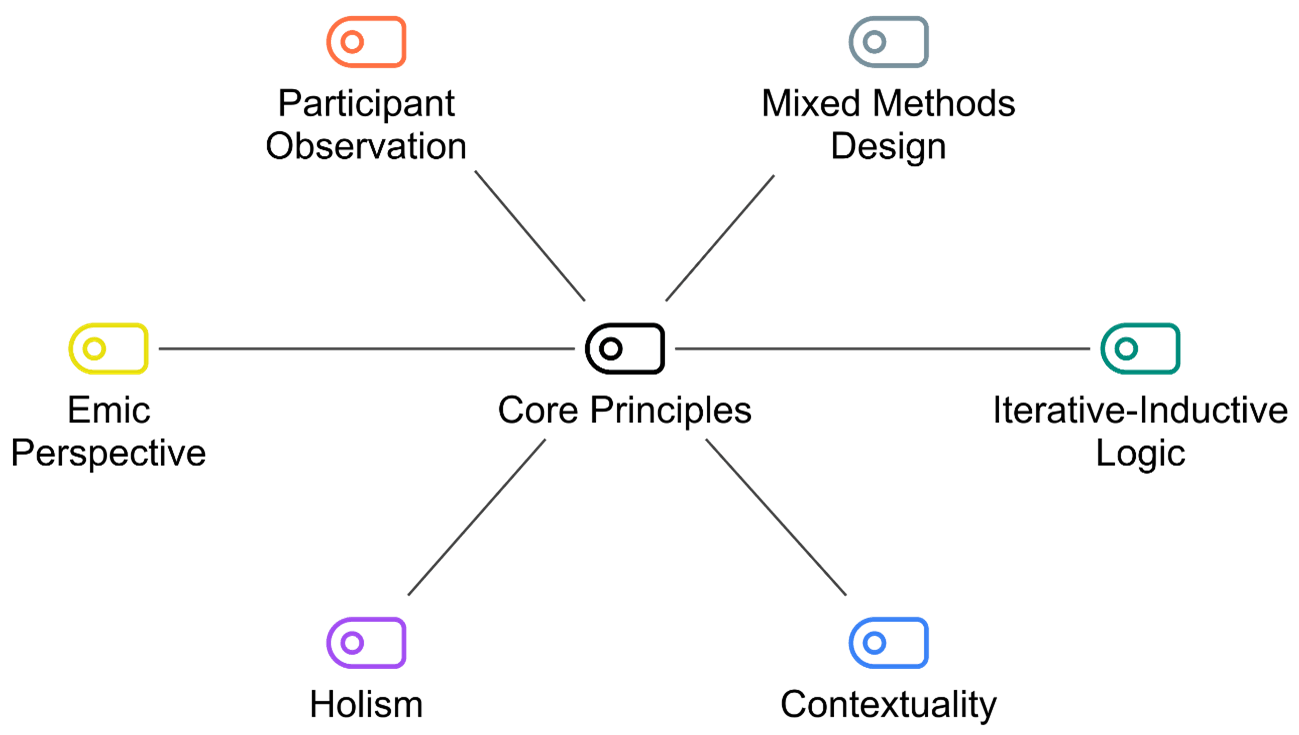
Source: Code-Subcode model created by the author using MAXQDA (2026)
1.2 Academic and applied ethnography
Academic fieldwork—often lasting 12–24 months in doctoral research—requires careful planning within academic and funding constraints. Preparation typically begins during undergraduate or master’s training, while engagement may continue beyond a thesis, sometimes spanning decades. Such longitudinal involvement enables nuanced understanding of social life over time and supports complex mixed methods designs.
In contrast, focused or rapid ethnography compresses timelines while preserving core principles, though with more limited depth. Widely used in organizational development, user experience, disaster response, policy evaluation, and business strategy, these approaches generate timely, actionable insights through focused questions and streamlined data collection. Combining academic and applied approaches can help balance rigor, contextual understanding, and practical relevance.
1.3 Is ethnography appropriate for your study?
Use this checklist to assess whether ethnography is a good fit for your study. If you answer “Yes” (✔) to most questions, ethnography is likely appropriate.
1. Epistemological Fit: what kind of knowledge do you need? | |
Your research requires deep understanding of meanings, practices, or social processes? | ☐ |
Is the phenomenon context-dependent, complex, or ambiguous? | ☐ |
Is the topic underexplored or lacking clear concepts, variables, or measures? | ☐ |
Do you need to understand processes over time (e.g. change, adaptation, trajectories)? | ☐ |
Are you prioritizing depth and contextual insight over statistical generalization? | ☐ |
2. Feasibility & Constraints: can you realistically do it? |
|
Can you gain sustained access to the field or community? | ☐ |
Do you have sufficient time for immersion (or accept trade-offs in rapid ethnography)? | ☐ |
Do you have the resources and logistical support required? | ☐ |
Are timelines compatible with iterative and flexible research design? | ☐ |
Are there no prohibitive barriers to access (legal, political, safety-related)? | ☐ |
3. Researcher Capacity: are you prepared for the role? |
|
Do you have interpersonal skills to build trust and rapport? | ☐ |
Are you able to practice reflexivity regarding your positionality (identity, insider/outsider status)? | ☐ |
Are you prepared for the emotional and psychological demands of fieldwork? | ☐ |
Are you prepared to negotiate your role in the field (observer, participant, or hybrid)? | ☐ |
Are you able to produce detailed, analytically rigorous writing? | ☐ |
Can you manage and organize large volumes of qualitative data? | ☐ |
Are you open to integrating qualitative and quantitative data? | ☐ |
Are you interested in multiple computational approaches? | ☐ |
4. Ethical & Institutional Conditions |
|
Can you ensure meaningful informed consent and confidentiality? | ☐ |
Are you prepared to address risks and ethical challenges, especially with vulnerable populations? | ☐ |
Does your institution support ethnographic timelines and methods? | ☐ |
Are ethical review frameworks compatible with iterative fieldwork? | ☐ |
5. Research Design & Use of Results |
|
Does your study require naturalistic observation? | ☐ |
Is the role of ethnography in your research design clearly defined? | ☐ |
Do you have a strategy to ensure credibility and validity (e.g., triangulation, prolonged engagement, reflexivity, consensus analysis)? | |
Do your expected various outputs from rich, contextual evidence? | ☐ |
Are you aiming for theory building, grounded insights, or context-sensitive interventions? | ☐ |
2 The Emergence of Modern Ethnography
The term ethnography derives from the Greek words ethnos (people, nation) and graphein (to write or describe), referring broadly to the description of peoples and their ways of life. Throughout history—from antiquity, through the age of overseas expansion and colonialism, to the Enlightenment—descriptions of human societies were produced by missionaries, travelers, merchants, colonial administrators, and natural historians. Although such accounts contributed valuable observations about human diversity, they were generally unsystematic and produced for administrative, religious, commercial, or exploratory purposes rather than scientific anthropological inquiry.
Herodotus (c. 484–425 BCE) and Ibn Khaldun (1332–1406) stand out as important precursors of ethnographic thinking. In Histories, Herodotus systematically described and compared the customs and institutions of various peoples known to the ancient Mediterranean world. Ibn Khaldun, in the Muqaddimah (Introduction to History), combined firsthand observation with comparative analysis of nomadic and urban societies, anticipating key concerns of modern ethnography (Fromherz, 2011). Nevertheless, both authors wrote within intellectual traditions shaped by ethnocentric conceptions of political community, often contrasting their own societies with others portrayed as foreign, barbarous, or less civilized.
The emergence of scientific ethnography in the late nineteenth and early twentieth centuries marked a shift toward more systematic approaches to data collection. Anglo-American anthropology sought to standardize ethnographic observation and analysis, with Notes and Queries on Anthropology, first published in 1874 by the Royal Anthropological Institute, providing a practical guide for producing comparable ethnographic accounts.
Although scholars such as Lewis H. Morgan (1818–1881), Edward B. Tylor (1832–1917), and James G. Frazer (1854–1941) were later labelled “armchair anthropologists,” engagement with empirical research varied. Morgan conducted extensive field investigations between 1859 and 1862, undertaking expeditions among peoples of the Great Plains and Upper Missouri regions and collecting comparative data on kinship systems (White, 1951).
Nevertheless, these scholars largely relied on second-hand reports to develop sociocultural evolutionism, a theory that portrayed societies as progressing along a unilineal path from “savagery” to “civilization.” This ethnocentric and speculative model drew on ideas traceable to ancient thought and remained and largely detached from firsthand evidence (Stocking Jr., 1992).
2.1 The Boasian Turn
2.1.1 Cultural Relativism
Franz Boas (1858–1942), a German-born scholar who migrated to the United States, played a central role in the transition toward scientific anthropology and ethnography (i.e. Boas, 1920). Influenced by Herder and natural history, he argued that cultures should be understood holistically and on their own terms through firsthand study, an approach consolidated during his 1883 expedition to Baffin Island, Canada, where he lived among the Inuit. Later known as historical particularism or cultural relativism, this perspective emphasized that each society reflects a distinct historical trajectory.
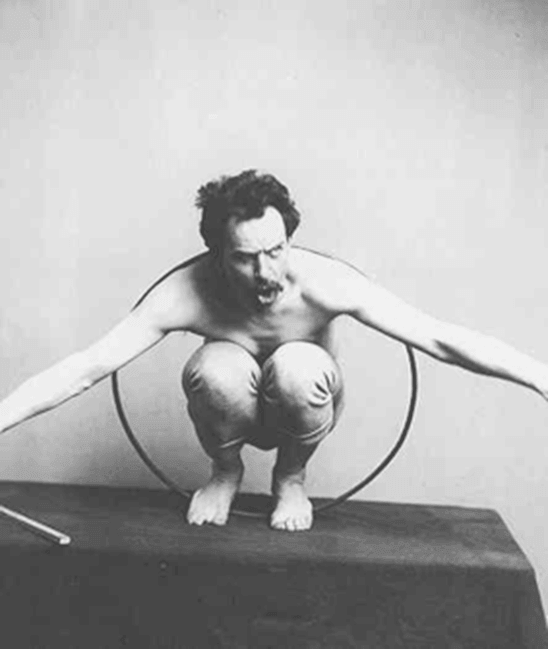
Source: Unknown author (1895 or before). National Anthropology Archives (NAA). Wikimedia Commons. Public Domain.
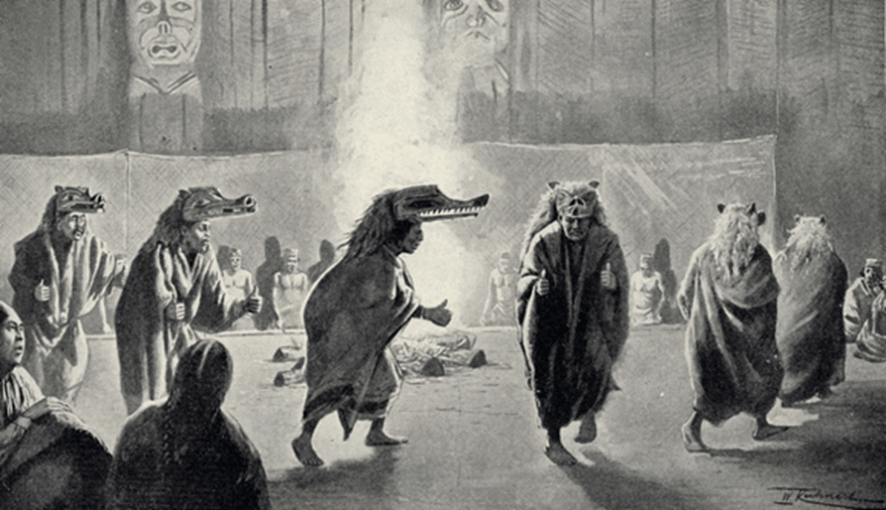
Source: W. Kuhnert, 1894. In: F. Boas’ The Social Organization and the Secret Societies of the Kwakiutl Indians (1897). Wikimedia commons. Public Domain.
2.1.2 Collaboration with Indigenous intellectuals
Boas also pioneered collaborative research with Indigenous intellectuals, notably George Hunt (1854–1933) and William Beynon (1888–1958), documenting languages, oral traditions, and ritual life. He trained the first generation of professional American ethnographers, helped establish anthropology as an academic discipline, and advocated for Indigenous rights (Angelbeck, 2023).
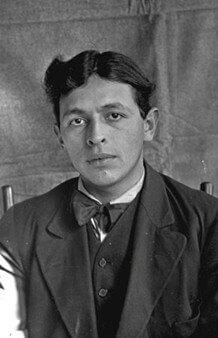
Source: M. Barbeau (1915). Canadian Museum of History. Wikimedia commons. Public Domain.
2.2 Ethnography as the Anatomy of Culture
As anthropology matured, ethnographers increasingly described societies through the metaphor of the “social body,” combining methods to study its constituent parts. This tripartite framework—spirit, skeleton, and flesh and blood—became influential for methodological integration.
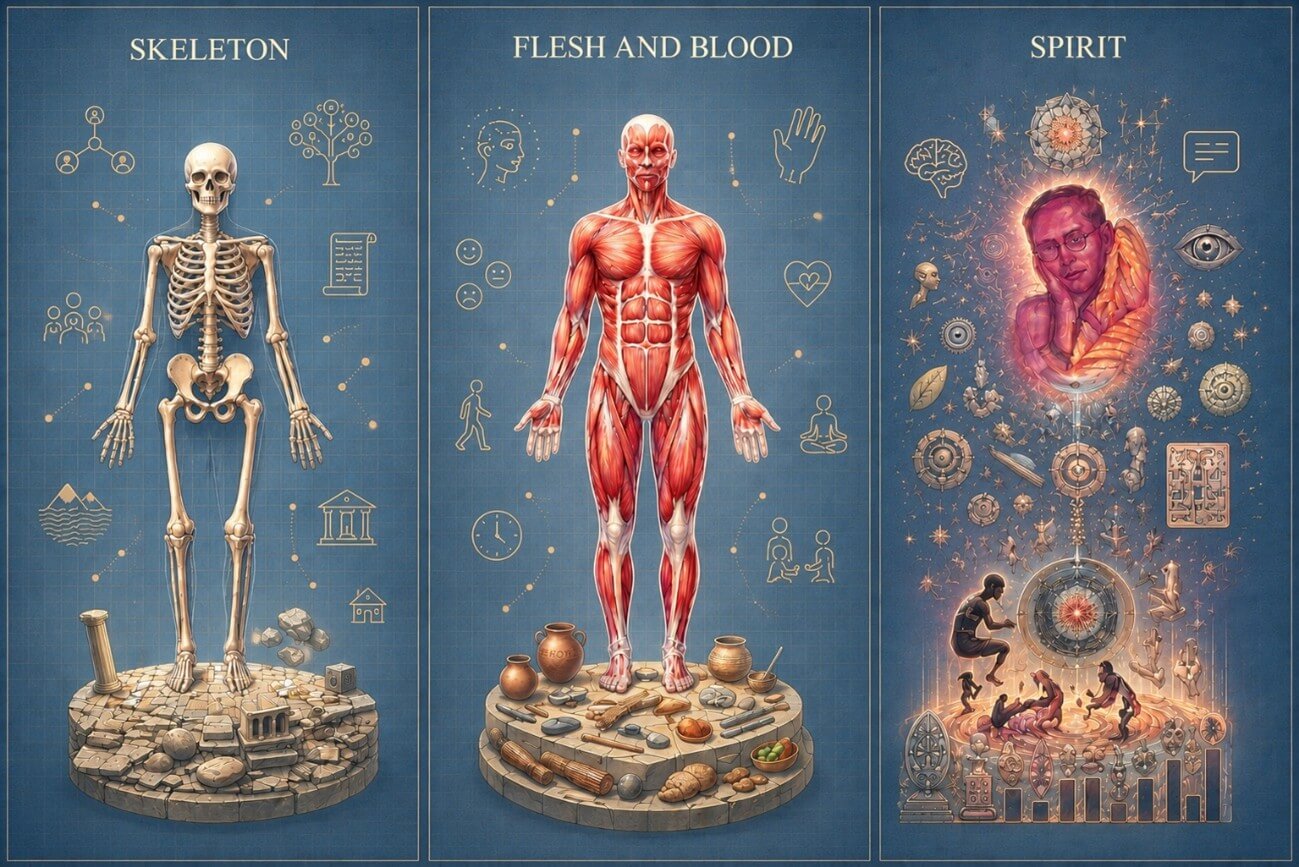
Source: Fiction imagined by the author with Google Gemini and ChatGPT. Malinowski’s face in spirit extracted from S. I. Witkiewicz (1930). Portrait of Bronisław Malinowski. Wikimedia commons. Public Domain.
2.2.1 Skeleton: Social Network Structures
Methodological refinement advanced during the 1898 Cambridge Anthropological Expedition to the Torres Strait, where William H. R. Rivers (1865–1922) developed the “genealogical method” to analyze kinship, inheritance, alliance, and land tenure (Rivers, 1900). He described kinship networks as the “skeleton” of the social body. In the early twentieth century, A. R. Radcliffe-Brown (1881–1955) expanded these insights through research in Australia and the Andaman Islands, helping shape British structural-functional anthropology (Radcliffe-Brown, 1941).
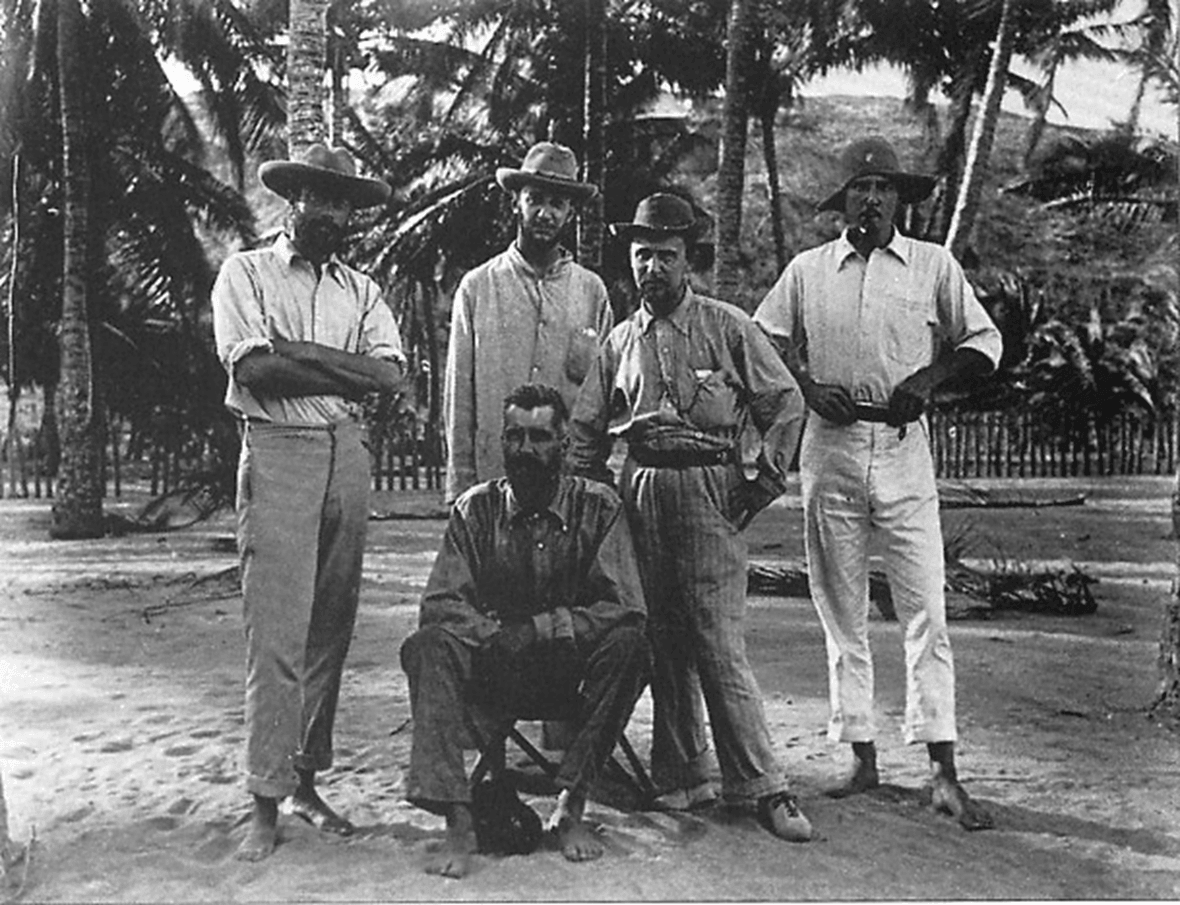
Source: Author Unknown (1898). University Museum of Archaeology and Anthropology, Cambridge. Wikimedia commons. Public Domain.
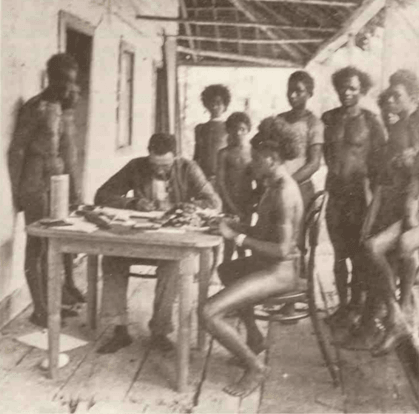
Source:Author Unknown. University Museum of Archaeology and Anthropology, Cambridge. Extracted from Stocking Jr. (The Ethnographer’s Magic…1992: 28). Public Domain
2.2.2 Spirit: Languages and Patterns in Mind
Drawing on fieldwork among the Mohave and comparative linguistics, Alfred L. Kroeber (1876–1960), Boas’s first doctoral student, challenged Morgan’s evolutionary classification of kinship, arguing that variation was linguistic rather than evolutionary (Kroeber, 1909). This insight helped frame culture as a set of largely unconscious patterns analogous to grammar. In this sense, Boas and Kroeber highlighted the “spirit” of the social body—the linguistic expressions through which mentalities become accessible—an approach that later influenced the French structuralism of Claude Lévi-Strauss (1908-2009) – i.e. Lévi-Strauss, 1966.
2.2.3 Flesh and Blood: Imponderabilia of Everyday Life
Bronisław Malinowski (1884–1942) gave modern ethnography its distinctive methodological form. During fieldwork in the Trobriand Islands (1915–1918) in Melanesia, he established participant observation as ethnography’s core method. Arguing that researchers must move “off the veranda” rather than study people from colonial outposts, he emphasized immersion in everyday life. This engagement provided access to the “flesh and blood” of the social body—attitudes, gestures, routines, and emotions—which he termed the “imponderabilia of everyday life.”
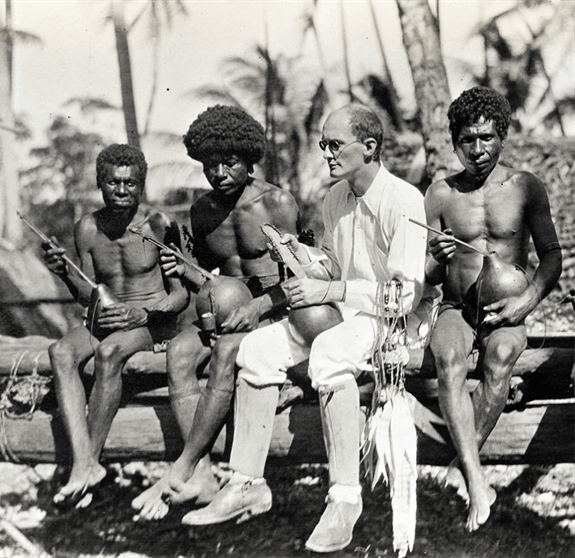
Source: Autor Unknown - possibly S. I. Witkiewicz (1928). Source: Wikimedia Commons. Public Domain.
Watch Strangers Abroad a documentary series intended to introduce six founders of social anthropology and ethnographic research.  |
2.3 Synthesizing the Whole
2.3.1 Ethnography as Mixed Methods Design
Malinowski’s methodological program was articulated in Argonauts of the Western Pacific ([1922] 2014), the monograph that helped inaugurate modern ethnography. Building on the metaphor of the social body, he combined participant observation to access the “flesh and blood” of everyday life, surveys, genealogies, censuses, and mapping to examine the “skeleton” of social organization, and interviews to document myths, life histories, chants, and other expressions of the “spirit.” This holistic orientation was further developed in the Manual of Ethnography ([1925] 2007), in which Marcel Mauss (1872-1950) advocated interdisciplinary and methodologically plural ethnography. As he argued, ethnographic inquiry requires historical, statistical, documentary, and interpretive sensibilities.
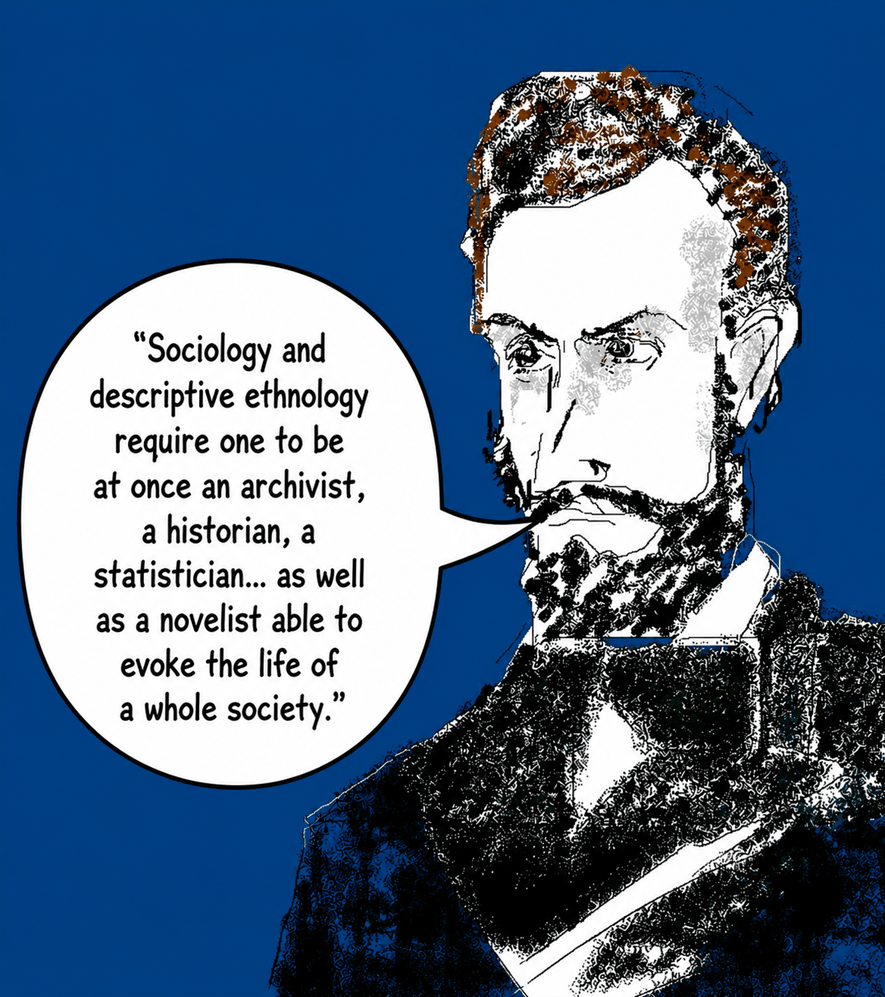
Source: Ballon with quoting added using AI (ChatGPT) to illustration created by キヨンネ. (2006). Marcel Mauss (1872 – 1950). Wikimedia Commons. Creative Commons.
In contemporary terms, this approach anticipated what later became known as complex mixed methods designs, integrating concurrent, sequential, and transformative strategies (Creswell & Plano Clark, 2011). Mixed methods integration was therefore not a later addition but a constitutive feature of modern ethnography from its inception. While ethnography emphasized in-depth studies of specific peoples, ethnology and anthropology focused on broader comparison. Though didactically useful, this distinction relied on rigid boundaries increasingly questioned in later decades.
2.4 Expansion of ethnography across disciplinary fields
Sociological ethnography emerged in the 1920s–1930s, particularly through the Chicago School of Sociology. Researchers used participant observation to study urban and industrial life, focusing on marginalized groups such as migrants, street gangs, sex workers, and informal workers. An emblematic example is Street Corner Society ([1943] 2002) by William Foote Whyte, a study of Italian American communities in Boston that revealed informal social structures in marginalized settings. However, sociologists often framed such work as field research or participant observation, reinforcing a narrow view of ethnography as a qualitative method rather than a multi- and mixed-methods design.
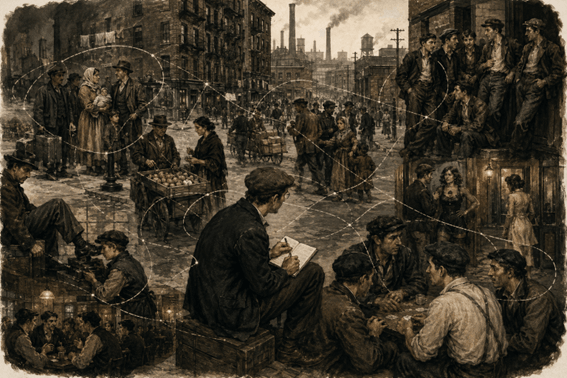
Source: Created by the author using AI ChatGPT (2026)
From the 1940s onward, ethnography expanded into occupations, education, health, business, and organizations. It became widely used to study institutional cultures—schools, hospitals, and enterprises—as well as social relations such as teacher–student, doctor–patient, healer–doctor, and employer–employee interactions. Through immersion, ethnographers examine how cultures shape experience, how people navigate hierarchies and authority, and how inequalities are reproduced through gender, class, race, and other social categories. Ethnography also illuminates interactions between modern institutions and traditional ways of knowing, producing, learning, and healing, including orientations toward continuity, change, and innovation.
2.5 Crisis, critique and grounding in contemporary ethnography
Over the twentieth and twenty-first centuries, ethnography diversified into practices associated with multiple theories, epistemologies, methods, sites, and national traditions. At the same time, it underwent a critical turn shaped by skepticism toward Enlightenment assumptions of universal and neutral knowledge. Postmodern critiques articulated the “double crisis” of representation and legitimation (Marcus & Fischer, [1986] 2014).
The crisis of representation challenged the idea that researchers can neutrally capture social reality, while the crisis of legitimation questioned criteria such as validity and generalizability. From this perspective, ethnographic writing is selective and situated, shaped by researchers’ positions and contexts. Postmodernism encouraged reflexivity and political awareness, especially regarding cultural translation and knowledge production. More recent approaches have sought to move beyond both naïve realism and radical skepticism while preserving their insights. Although researchers’ positions shape knowledge, contemporary ethnography reaffirms the value of systematic inquiry, with reflexivity, transparency, and multiple viewpoints becoming common ground across diverse traditions.
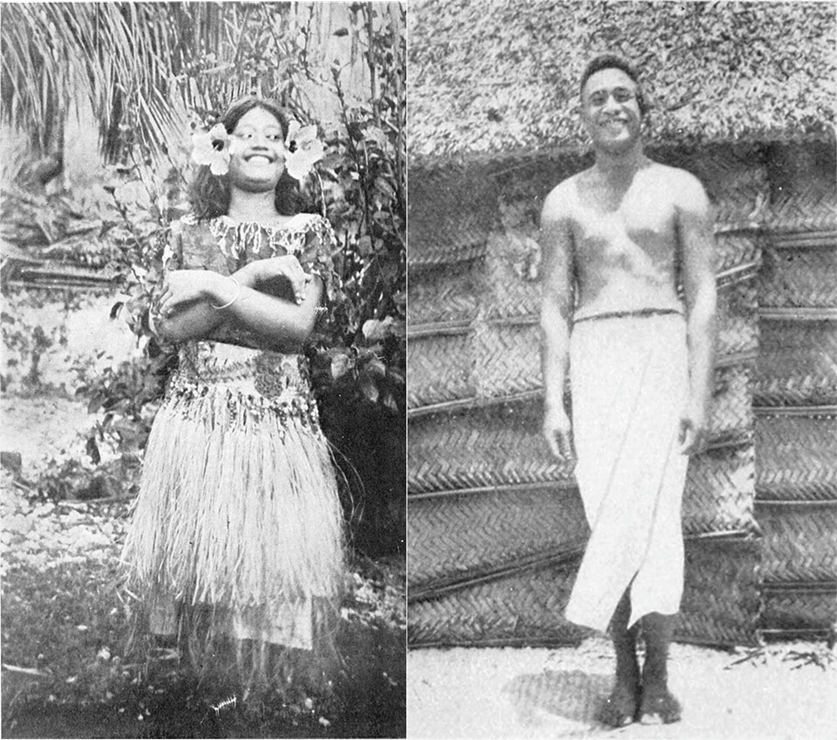
Source: M. Mead (1928). Coming of age in Samoa; a psychological study of primitive youth for western civilization. Wikimedia Commons. Public Domain.
Challenging the Classics The Malinowski Paradox: Refers to the contrast between Bronisław Malinowski’s professional persona—the empathetic ethnographer portrayed in Argonauts of the Western Pacific ([1922] 2014)—and the figure revealed in his posthumous field diaries ([1967] 1989). While Malinowski presented fieldwork as immersion into the native’s point of view, he largely obscured colonial conditions and personal struggles. His diaries revealed loneliness, illness, and hostility toward interlocutors, including racialized language shaped by the colonial milieu. The controversy encouraged greater reflexivity, emphasizing that ethnographic knowledge is shaped by researchers’ positionality and biases. The Mead–Freeman Controversy: Guided by Franz Boas and Ruth Benedict, Margaret Mead studied adolescence in Samoa to examine the relationship between biology and culture. In Coming of Age in Samoa ([1928] 2024), she portrayed Samoan adolescence as relatively conflict-free and sexually permissive. Decades later, Derek Freeman argued that Mead had been misled by informants and influenced by her own expectations, emphasizing stricter sexual norms. The debate raised broader questions about interpretation, researcher bias, and the possibility of divergent yet plausible accounts of the same society, sometimes called the “Rashomon effect” in ethnography. The Sahlins–Obeysekere Debate: Influenced by structuralism, Marshall Sahlins analyzed the 1799 death of Captain James Cook among Hawaiian natives to examine how distinct cultural frameworks shape historical understanding. In Historical Metaphors and Mythical Realities (1981), and other writings, he argued that Hawaiians perceived Cook as the returning god Lono according to their cosmology. A few years later, Gananath Obeysekere (1992) countered that Sahlins had reproduced a Eurocentric myth, arguing that Hawaiians possessed a universal "practical rationality" and viewed Cook merely as a powerful foreign chief. The debate raised broader questions about cultural particularism versus universalism, ethnographical interpretation and postcolonial critique, as well as the politics of representing the historical "other." |
2.6 Critical turns in Ethnography
2.6.1 Critical, Feminist and Postcolonial Approaches
Contemporary ethnography has been shaped by critical approaches examining how power, inequality, and representation structure social life. Influenced by Marxism, feminism, post-structuralism, and decolonial thought, critical ethnography investigates how domination is reproduced and contested while emphasizing researcher reflexivity. Cultural studies, associated with Stuart Hall (1932-2014), linked ethnography to ideology, power, and meaning in everyday life (i.e. Hall and Du Gay, 1996).
Postcolonial and anti-racist ethnography confront the discipline’s ties to colonialism and racism, challenging researcher authority over the “other.” Decolonial approaches emphasize reciprocity, Indigenous ontologies, data sovereignty, and greater research authority for participating communities.
Feminist and gender ethnography emerged from critiques of male-centered research and “gender blindness” (Haraway, 1988). These approaches recover marginalized perspectives, examine how gender shapes social relations, and encourage reflexivity about the researcher’s position (Gailey, 2014).
More broadly, reflexive and autobiographical ethnography treats researchers’ experiences as sources of insight into wider social processes. Rather than maintaining distance between observer and observed, ethnography increasingly recognizes being affected by others as central to knowledge production (Favret-Saada, 1990).
2.7 Texts, codes and thick descriptions
In response to the crises of representation and legitimation, ethnography underwent a “linguistic turn,” increasingly interpreting cultural practices as texts. Clifford Geertz’s (1973) notion of thick description became central: rather than simply recording behavior, ethnographers interpret actions through the intentions, emotions, and cultural meanings that make them intelligible. This approach emphasizes symbolic systems, cultural codes, and reflexive writing, recognizing ethnographic accounts as intersubjectively produced rather than neutral representations of reality.
2.8 Shared mental models
Contemporary ethnography increasingly combines interpretive and post-positivist perspectives to identify patterns of meaning underlying observable behaviour. Structural and cognitive approaches examine cultural schemas and shared mental frameworks expressed through narratives and discourse (Quinn, 2005; Farnell and Graham, 2014). Researchers analyze language at multiple levels—from keywords and metaphors to narratives and speaker comparisons—often using computational tools to identify recurring assumptions and cultural logics. Research on mind, meaning, memory, discourse, and cultural models has further expanded ethnography's dialogue with cognitive science, neuroscience, and artificial intelligence (Bennardo & DeMunck, 2014).
2.9 Digital Ethnography
As social life increasingly unfolds online, ethnography has expanded into digital environments. Subfields such as virtual ethnography and netnography adapt participant observation, interviews, and network analysis to study online communities, social media, and gaming environments, enabling observation of digital interactions over time (Boellstorff et al., 2012; Hine, 2000; Kozinets, 2009). Ethnography has also become central to applied fields such as user experience (UX), organizational research, and product design. Methods such as contextual inquiry, rapid ethnography, and mobile ethnography generate insights into everyday practices through observation, digital traces, photos, videos, and participant records (Muskat et al., 2018; Singh, 2026).

Source: Created by the author using AI ChatGPT and Google Nano Banana (2026)
3 Ethnographic Research Methods
3.1 Immersive Methods
3.1.1 Participant observation and fieldnotes
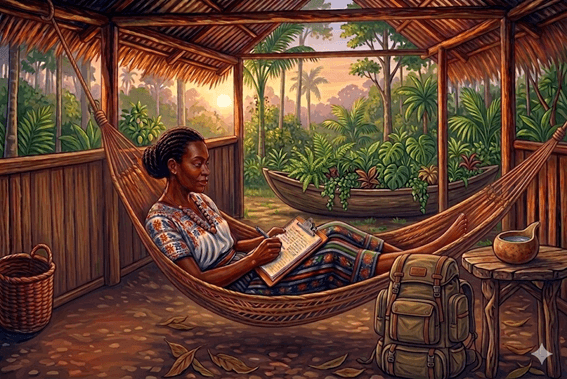
Participant observation is the cornerstone of ethnographic inquiry. Researchers engage in community life while maintaining enough analytical distance to observe and document social phenomena. This dual position—simultaneously insider and outsider—provides ethnography’s distinctive advantage. Fieldwork usually unfolds iteratively: early stages emphasize observation, relationship-building, and trust, while later attention focuses on phenomena relevant to the research questions. The degree of participation varies by context, ethics, and feasibility, ranging from greater distance to deep integration into community roles. Determining the appropriate level of participation is therefore both a methodological and ethical decision (Schensul, 2010, 2013b, 2015; Bernard, 2006).
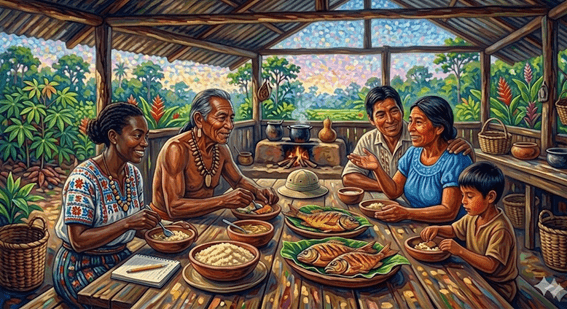
Source: Created by the author using AI ChatGPT and Google Gemini (2026)
Fieldnotes are ethnography’s primary data source, documenting observations, conversations, and reflections during or after fieldwork. Effective fieldnotes combine descriptive detail (people, actions, settings, artifacts), direct quotations preserving participants’ language, analytical commentary linking observations to emerging interpretations, and reflection on the researcher’s positionality and possible biases. More than description, fieldnotes provide a space for reflexive analysis and theory building.
Source: Created by the author using AI ChatGPT and Google Gemini (2026)
3.1.2 Qualitative Interviews
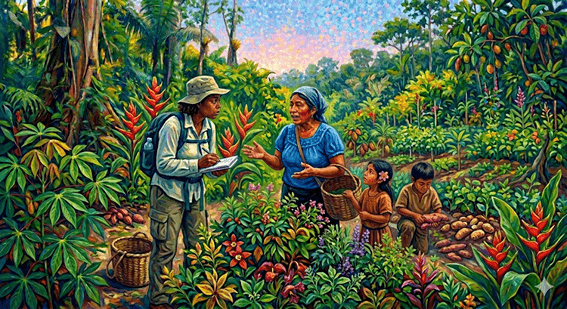
Interviews complement participant observation by accessing people’s interpretations and experiences. Effective interviewing requires attentiveness and openness to unexpected insights. Ethnographers commonly use open-ended interviews to explore concepts and history, semi-structured interviews to compare patterns with flexibility, and focus groups around specific topics. Recording requires informed consent, and materials must be securely stored and transcribed for analysis (i.e. Patton, 2014; Schensul, 2010, 2013b; Bernard, 2006).
Source: Created by the author using AI ChatGPT and Google Gemini (2026)
3.1.3 Multimedia
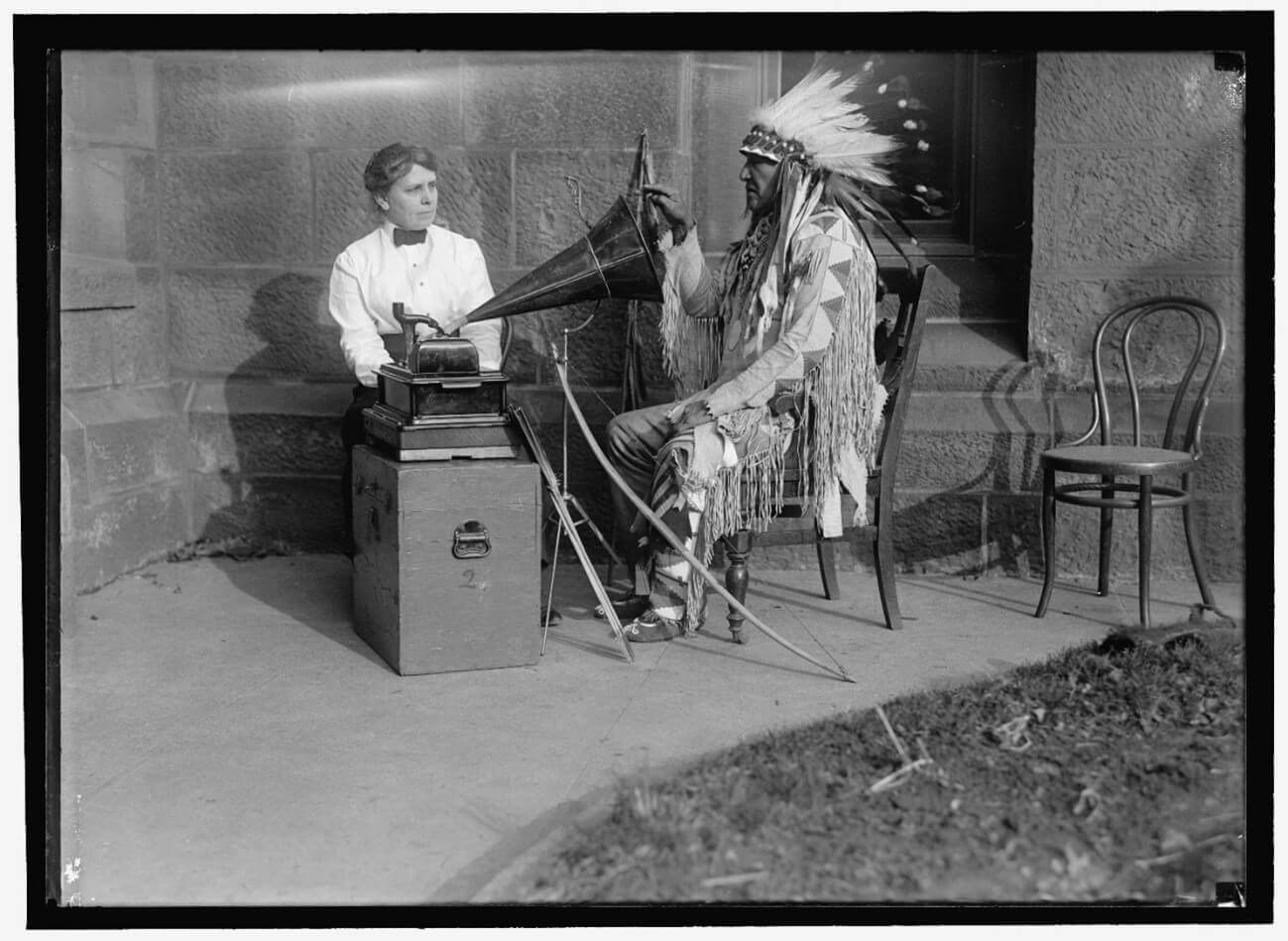
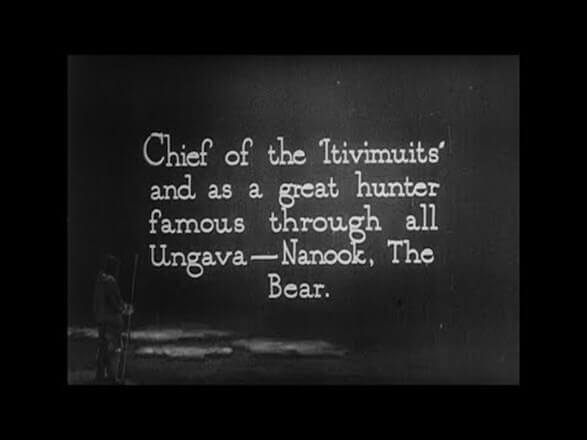
Photography, audio, and film complement textual observation by documenting expressions difficult to capture in writing. Multimedia data require contextual metadata—time, place, authorship—and ethical safeguards such as informed consent. Photography documents objects, spaces, and routines; audio captures speech and linguistic rhythms; film records movement and interaction. Digital technologies have enabled more spontaneous documentation, while collaborative ethnography increasingly incorporates participant-generated media, especially in Indigenous and community-based research (El Guindi, 2014; Nastasi, 2013; Mosher, 2013).
Source: Harris & Ewing (1915). Library of Congress. Wikimedia Commons. Public Domain.
3.1.4 Artifacts, records and archival document research
Ethnography often incorporates documents, records, and artifacts to contextualize observed practices and meanings. Sources include policy documents, organizational records, archives, media, diaries, and material objects. These materials provide historical perspective, clarify institutional narratives, and enable comparison between official representations and observed practices (Schensul, 2013; LeCompte and Ludwig, 2013).

Source: Imagined by the author using AI Google Gemini (2026)
3.2 Specialized Methods
3.2.1 Census taking and ethnographic surveys
3.2.1.1 Census taking
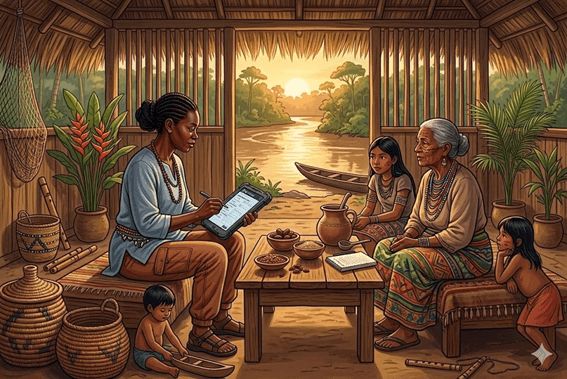
Ethnographic censuses document individuals, households, and institutions within a research setting. Rather than surveying large populations, they map local demographic, socioeconomic, and territorial patterns to support sampling and contextual analysis. Common variables in questionnaires include household composition, livelihoods, education, ethnicity, religion, and migration, ideally informed by prior qualitative inquiry to ensure meaningful local categories (cf. Schensul and LeCompte, 2010; Bernard, 2006).
Source: Imagined by the author using AI Google Nano Banana (2026)
Census data are often geographically mapped and compared with official statistics, especially in research on hidden populations, policy evaluation, or territorial rights. Digital tools support multilingual questionnaires, geolocation, and mixed-mode data collection, while platforms such as MAXQDA facilitate integration with qualitative materials (Kuckartz, 2014; Kuckartz and Rädiker, 2019).
3.2.1.2 Ethnographic surveys
Unlike conventional surveys, ethnographic surveys are developed after qualitative fieldwork to assess cautious generalizability. They use structured instruments based on emic categories, translating qualitative findings into measurable variables through scales, rankings, and categorical responses (Quinn, 2005; Bernard, 2006; Schensul and LeCompte, 2013d; Bennardo and DeMunck, 2014; Bernard and Gravlee, 2014).
Data collection relies on structured tools and digital platforms (e.g., Survey Solutions). Analysis uses cognitive anthropology tools (Anthropac, UCINET, AnthroTools for R), statistical packages (SPSS, Stata, R), and QDA platforms such as MAXQDA to integrate survey and qualitative data for mixed-methods triangulation.
3.2.2 Spatial mapping
3.2.2.1 Mapping geographical data
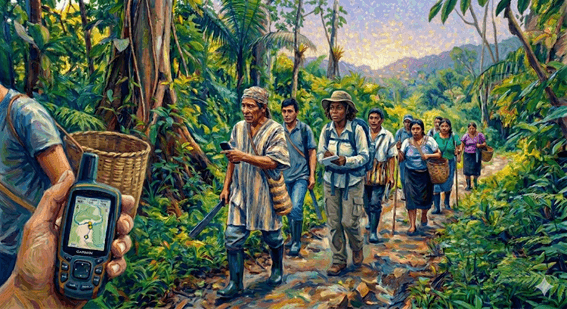
Mapping is central to ethnography because social life unfolds spatially. Geographic mapping documents settlement patterns, infrastructures, resources, and interaction sites, helping define study areas, organize logistics, guide sampling, and identify relationships beyond observation or interviews. Participatory mapping allows communities to represent their own territories and spatial knowledge, particularly in territorial rights, environmental, and health contexts. Contemporary GIS and digital cartography tools (e.g., ArcGIS, QGIS, R tools) integrate geographic and social data for visualization and analysis (Cromley, 2013; Brondízio and Ban Holt, 2014).
Source: Imagined by the author using AI Google Nano Banana (2026)
3.2.2.2 Cognitive maps and other drawing tasks
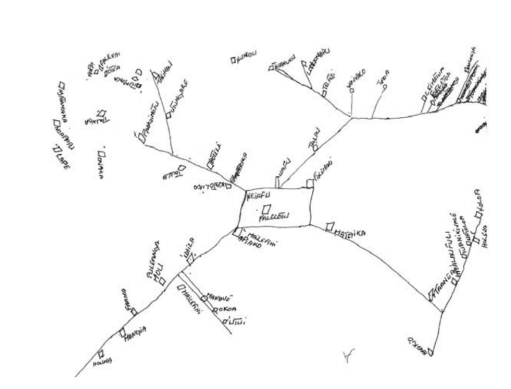
Drawing tasks provide access to forms of knowledge difficult to express verbally. Participants may draw places, routes, bodies, or cosmological spaces, revealing how environments are perceived and organized. Variations, omissions, and distortions are analytically meaningful, reflecting culturally shared understandings that shape perception and action (Bennardo, 2009).
Source: G. Bennardo Language, space, and social relationships: A foundational cultural model in Polynesia (2009: 128)
3.2.3 Elicitation techniques
3.2.3.1 Cultural domains elicitation
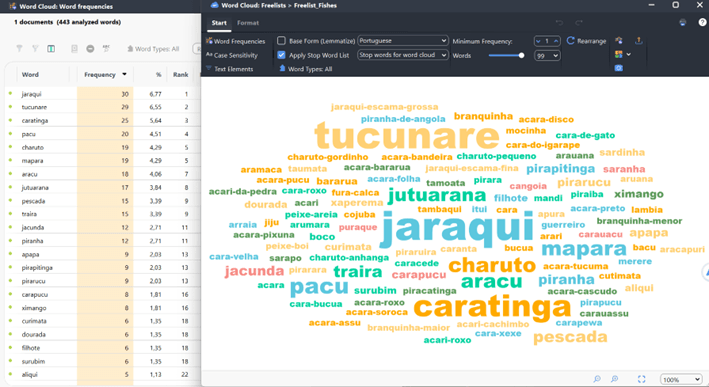
A cultural or semantic domain is a set of concepts recognized as belonging to the same category (e.g., kinship, illnesses, foods). Because societies classify experience differently, ethnographers use elicitation techniques to identify meaningful local categories and their organization. This process typically involves: (1) identifying domains through interviews, (2) eliciting items through free listing, and (3) examining relationships such as similarity or hierarchy. Free listing provides an emic overview of shared knowledge by asking participants to name items within a category (e.g., “What festivities exist in your village?”). Pile sorting groups these items by perceived similarity, revealing categories and semantic boundaries. Clustering and multidimensional analyses identify recurring patterns in knowledge organization (De Munck, 2009; Borgatti and Halgin, 2013; Bennardo and De Munck, 2014).
Source: Created by the author using MAXQDA (2026)
Specialized cognitive anthropology tools—such as Anthropac, UCINET, and the AnthroTools R package—analyze cultural salience in free lists and map pile-sort structures. QDA platforms such as MAXQDA offer a complementary approach, supporting content analysis, clustering, and keyword-in-context (KWIC) retrieval to connect analytical patterns with original textual contexts.
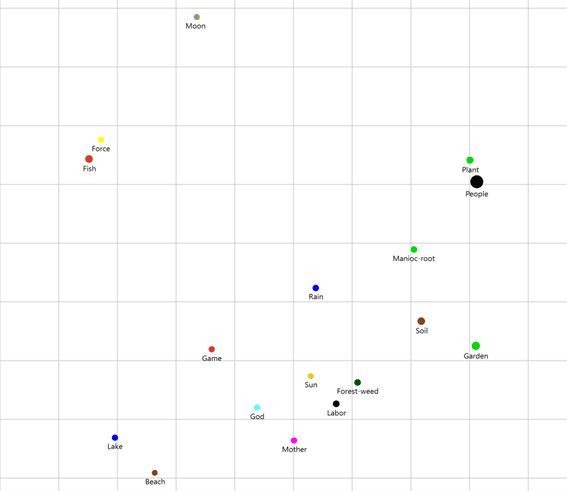
Source: Created by the author using MAXQDA (2026)
3.2.3.2 Kin term map elicitation
All known societies organize kinship through terminologies governing how relatives are classified and addressed. Since the nineteenth century, ethnographers have analyzed kin terms as rule-based systems reflecting cultural models rather than biology alone. Kin term mapping examines relationships among terms instead of imposing external genealogical categories (cf. Read, 2015). By documenting reciprocal relations and visualizing them, researchers can identify the logic structuring social relations. Computational tools such as KAES (Kinship Algebra Expert System) formally model these systems, while QDA platforms support analysis of kinship terminology in qualitative materials.
3.2.4 Social Networks
3.2.4.1 Genealogies and kinship networks
The genealogical method documents kinship relations to analyze inheritance, marriage, alliance, and demographic change (Rivers, 1900). Combined with census and life history data, genealogies situate individuals within broader social structures and support territorial claims, historical reconstruction, and medical research. Contemporary approaches move beyond family trees to examine kinship as dynamic networks, identifying patterns such as marriage circuits, migration, hereditary conditions, class, and ethnicity (Brudner and White, 1997; Hamberger et al., 2014).
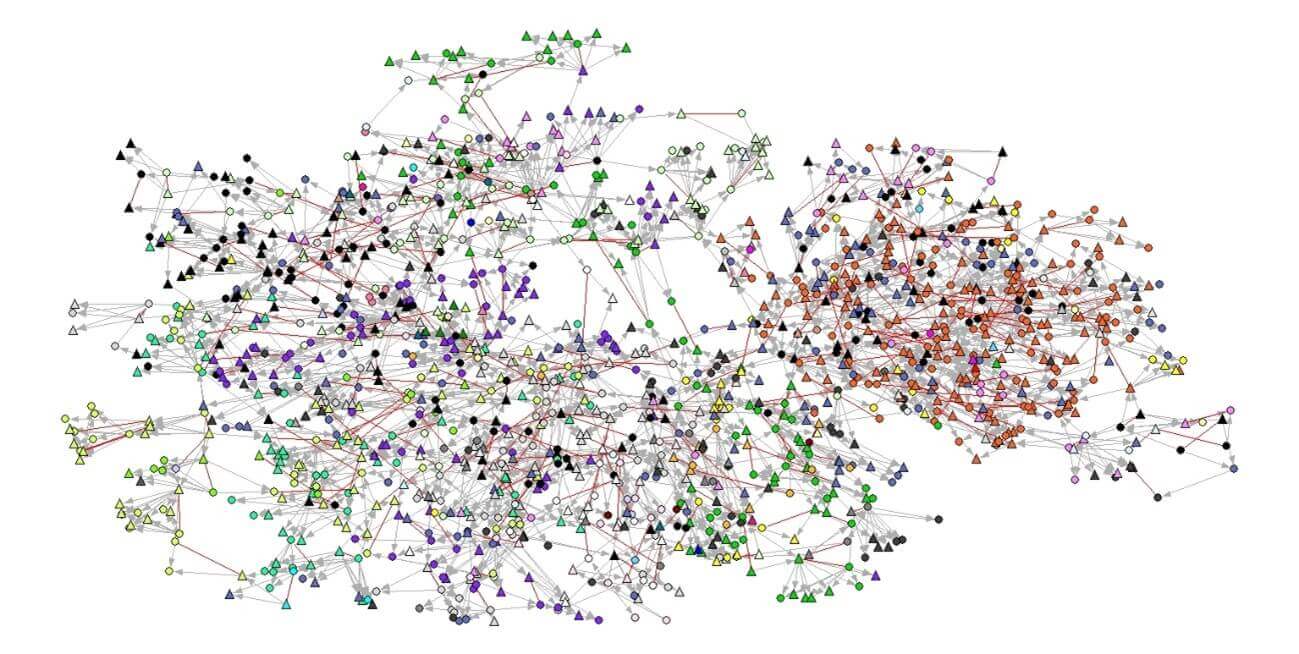
Source: Created by the author using PUCK and Pajek (2026)
Contemporary tools support the management, visualization, and analysis of kinship data. PUCK (Program for the Use and Computation of Kinship Data) enables researchers to build databases, generate statistics, identify matrimonial circuits, and export data for visualization. Programs such as Pajek and Gephi support large network visualization, while GenoPro and KinOath Kinship Archiver facilitate genograms and links with qualitative materials (audio, video, written records).
3.2.4.2 Social networks
While elicitation techniques examine meanings and categories, social network analysis focuses on relationships among actors, including friendship, exchange, influence, and organizational ties. It helps trace flows of information and resources, identify influential actors or hidden populations, and analyze trust and hierarchy. Ethnographers transform relational insights from fieldnotes, interviews, and observation into structured datasets (e.g., who interacts with whom). Ethnographic network research ranges from qualitative mapping of recognized groups to formal analysis, including ego-centered, whole-network, and macro-network approaches (Scott and Carrington, 2011; Trotter II et al., 2013; McCarty and Molina, 2014).
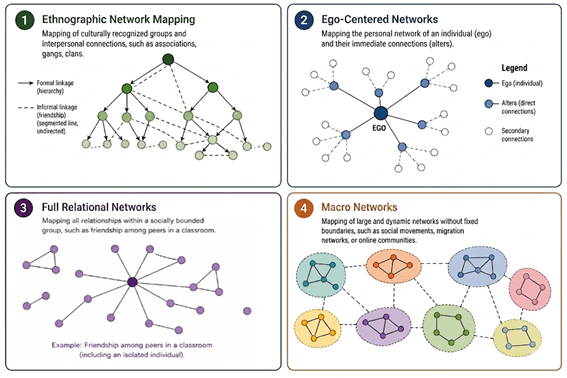
Source: Author. (2026). Coding with MAXQDA. Image created with ChatGPT and Google Gemini (2026)
QDA coding extracts relational information from qualitative materials. Software such as Pajek and Gephi supports analysis of large relational datasets and network visualization, especially in complex studies.
3.2.5 Coding ethnographic data
Coding transforms field materials into structured systems for analysis, identifying patterns and meanings. Most studies combine inductive (themes emerging from data) and deductive strategies (guided by theory or prior concepts), supported by software such as MAXQDA (Schensul and LeCompte, 2013d; Kuckartz, 2014; Kuckartz & Rädiker, 2019).
Technique | Purpose |
Open | Initial labeling to identify emerging concepts. |
Axial / Thematic | Connects codes into categories and themes. |
Visual | Organizes codes through interactive visual systems. |
Word-based | Identifies frequent terms and cultural domains. |
Dictionary-based | Uses predefined code lists for retrieval. |
AI-Assisted | Uses algorithms to suggest or cluster codes. |
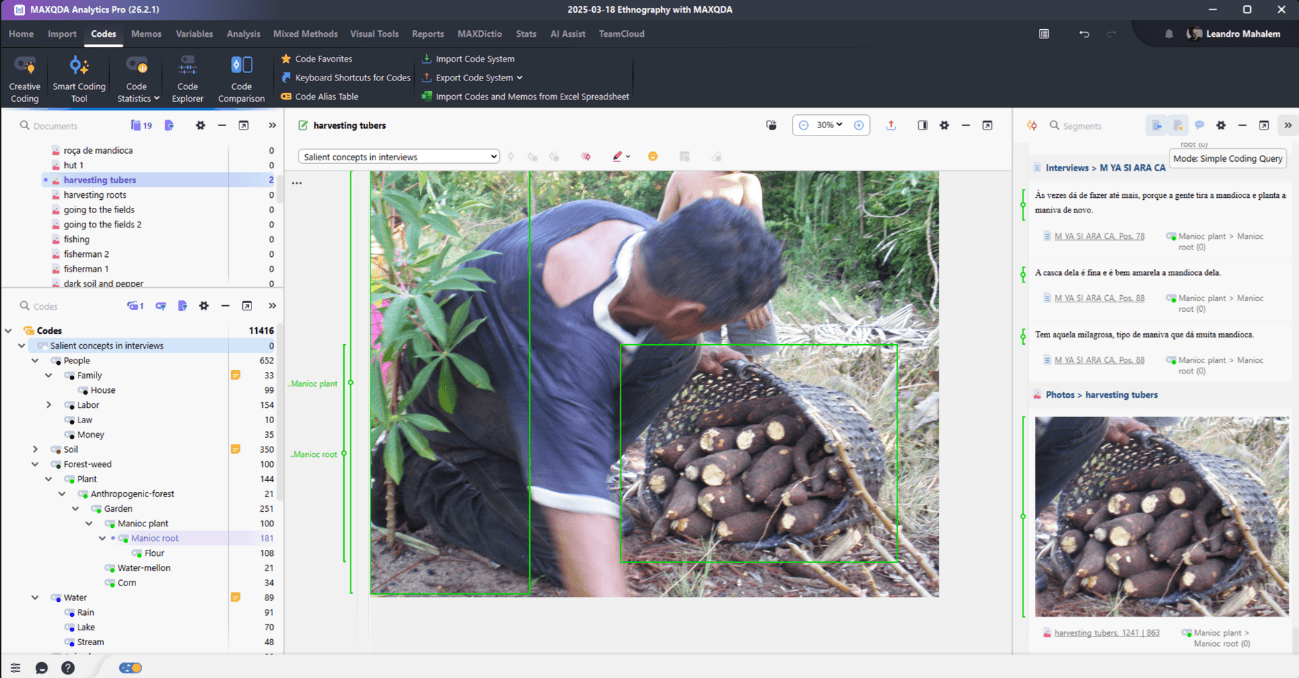
Source: Created by the author with MAXQDA (2026)
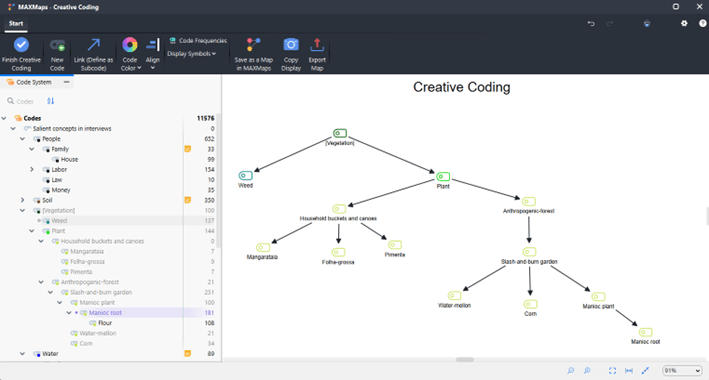
Source: Created by the author with MAXQDA (2026)
Analysis moves from coding to interpretation and theory-building, much like grounded theory (Glaser and Strauss, 1967; Bryant and Charmaz, 2010; Rädiker, 2023). This progression connects detailed data to broader interpretation and mixed methods approaches.
Procedures | Purpose |
Identify patterns | Detect recurring themes, relations, and contradictions. |
Develop concepts | Group patterns into broader analytical categories and descriptive blocs. |
Build Theory | Link concepts and descriptions into explanatory frameworks. |
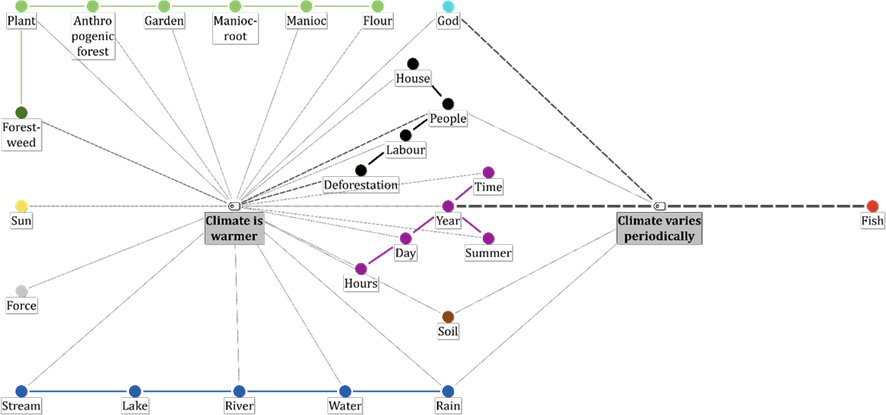
Source: Created by the author with MAXQDA (2026)
3.3 Sampling Strategies
Classical ethnography often focused on small, bounded communities studied intensively over long periods, enabling direct documentation of most individuals or social units. This holistic approach minimizes sampling bias and maximizes contextual depth. When populations are large, dispersed, or inaccessible, sampling becomes necessary (Bernard, 2006; Schensul and LeCompte, 2010, 2013c; Guest, 2014).
Sampling begins by defining the population, units of analysis (e.g., individuals, households, organizations), and relevant criteria such as age, gender, residence, or occupation. Ethnography often combines strategies across stages: early phases rely on criterion-based approaches, while later stages may incorporate systematic or probabilistic techniques to support cautious generalization.
- Criterion-based sampling is especially useful during exploratory stages, prioritizing strategically selected cases rather than statistical representativeness. Common strategies include convenience sampling, reputational sampling to identify knowledgeable informants, extreme or typical cases, and snowball sampling to access hidden populations.
- Intermediate approaches strengthen cautious generalization where complete sampling frames are unavailable, including quota sampling, targeted sampling, and respondent-driven sampling (RDS).
- Probabilistic sampling supports statistical generalization through random selection. Common strategies include simple random sampling, systematic sampling, stratified sampling for subgroup representation, and cluster sampling of naturally occurring groups such as neighborhoods or schools.
Sampling also relates to temporal design. Cross-sectional research collects data at one point in time, while longitudinal designs involve repeated collection to examine trajectories and social change. Rapid ethnography tends toward cross-sectional approaches, whereas long-term projects often benefit from longitudinal designs.
4 Ethics in Ethnography
Ethnographic research involves close engagement with people’s lives, generating ongoing ethical responsibilities regarding protection, sensitive information, and trust. Ethics is not a one-time checklist but a continuous practice embedded in design, fieldwork, analysis, and dissemination. Rather than separate from methodology, it is integral to knowledge production. Through ongoing consent, reflexivity, risk awareness, and careful data management, ethnographers can conduct rigorous research while protecting participants and communities (Fluehr-Lobban, 2014; Schensul and LeCompte, 2015).
4.1 Risk management
Because of its immersive nature, ethnography may expose participants to risks beyond the research setting. Ethical practice requires anticipating harm, minimizing risks, and remaining attentive throughout the project.
4.1.1 Types of potential harm
Ethnographers must always weigh the benefits of research against the potential risks for participants.
- Physical Harm: Dangerous settings may expose participants to harm; use risk assessment and safety protocols.
- Psychological Harm: Research on trauma or loss may cause distress; show sensitivity and provide referral when possible.
- Social Harm: Disclosure of stigmatized identities may harm reputation or relationships, even when anonymized.
- Economic Harm: Findings may expose livelihoods to sanctions or loss; weigh risks against benefits.
- Environmental Harm: Disclosure of resource use may intensify tensions or threaten livelihoods.
- Legal Harm: Research on illegalized practices may expose participants to prosecution; requires strict confidentiality.
4.1.2 Working with vulnerable populations
Vulnerable groups (e.g., migrants, incarcerated individuals, Indigenous peoples, or impoverished communities) require heightened ethical care due to dependency, expectations, or risk exposure. Ethnographers often navigate between advocacy (supporting community goals) and neutrality (analytical distance). Rather than adopting one exclusively, researchers can combine ethical commitment with methodological rigor—reflecting on positionality, minimizing harm, and managing expectations transparently.
4.2 Informed consent in ethnographic research
Ethnographic consent is ongoing rather than a one-time procedure, since fieldwork involves evolving relationships and contexts. Consent is therefore a continuous process of communication, trust-building, and renegotiation.
4.2.1 Procedures adapted to cultural contexts
Consent procedures should reflect local cultural and linguistic conditions rather than rely on standardized models.
- Voluntary, Safe and Free Consent: Free from coercion or gatekeeper pressure.
- Oral Consent: May replace written forms where appropriate.
- Clear and Multiple Languages: Information provided in accessible languages.
- Flexible Consent Procedures: Written Signature, Oral Consent, Community/Group Consent, Adapted Protection (Adapted to context while ensuring protection.)
4.2.2 Consent for specific tasks and data types
Good practice requires task-specific consent, allowing participants to accept or decline activities.
- Interviews & Focus Groups: Participants must know topics, goals and techniques (Recording, transcription, anonymization, topic limits)
- Photographs & Video Recordings: Explicit review and secure storage are vital (Identifiability, use, storage, participant review)
- Audio Recordings: Requires clear voice protection and deletion rights (Voice identification risks and deletion rights)
- Artifacts & Documents: Addresses rights to physical and cultural objects (Ownership, attribution, future use)
- Observation in Private Spaces: Consent adapts dynamically to the setting's privacy level (Explicit consent in private spaces; implicit consent in public settings)
- Task-Specific Consent: A Flexible Process: Optimizes ethical standards and participant control (Participants can select which data types to accept or decline)
4.2.3 Multilevel consent
Ethnographic research often occurs within nested social structures, requiring consent at multiple levels.
- Individual Level: Voluntary participation in all research activities.
- Family & Household Level: May require collective agreement, especially with minors.
- Community Level: Leaders may authorize access but not replace individual consent.
- Organizations & Institutions Level: Formal approval required in organizations and agencies.
4.3 Data management plan
A Data Management Plan (DMP) defines how data are collected, stored, analyzed, and shared. In ethnography, it ensures ethical compliance, confidentiality, and alignment with consent and community protocols.
Component | Key considerations |
Data types | Specify fieldnotes, recordings, images, transcripts, maps, digital data. |
Collection and organization | Fieldnotes, recordings, images, transcripts, maps, digital data. |
Confidentiality and privacy | Anonymization, access control, secure handling. |
Storage, backup, and security | Encrypted systems and secure backups. |
Documentation and contextualization | Metadata, codebooks, and contextual information. |
Preservation and sharing | Access levels, archiving, or deletion aligned with ethics. |
Roles and responsibilities | Clear assignment of data roles. |
Tools and implementation | Digital systems adapted to ethical and project needs. |
5 Computer tools for ethnographic research
The first generations of modern ethnographers, from different backgrounds and theoretical, would likely be impressed by the range of digital tools available for research today. Contemporary software enables documentation, organization, analysis, visualization, and integration of diverse materials, including fieldnotes, interviews, bibliography, images, geospatial data, genealogies, and social networks.
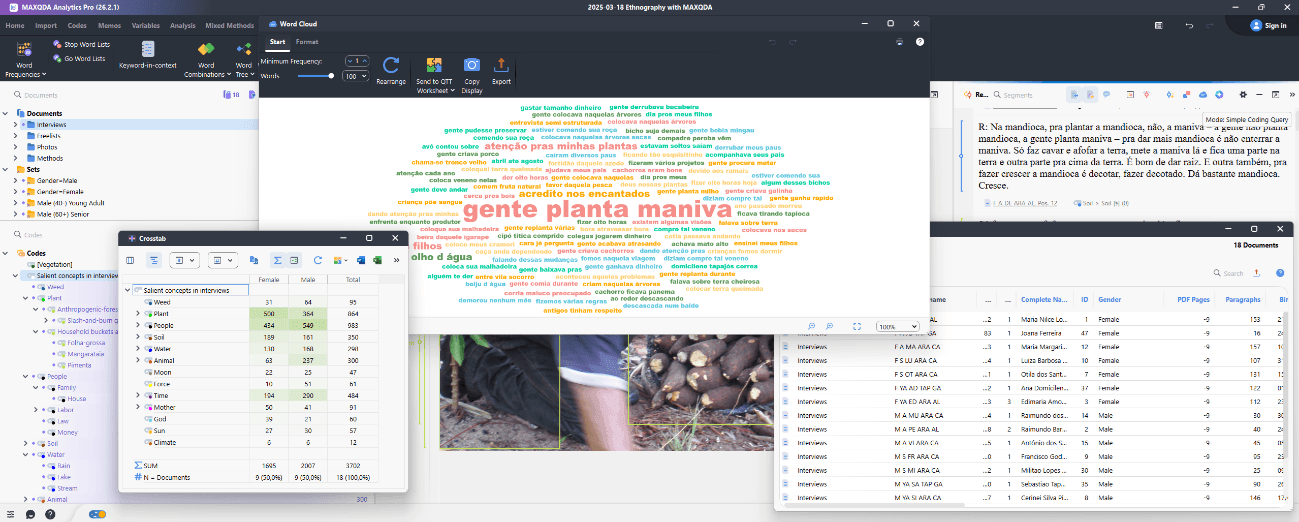
Source: Created by the author with MAXQDA (2026)
Platforms such as MAXQDA support the integration of qualitative and quantitative evidence through mixed methods approaches that were only imagined decades ago. Specialized tools for spatial analysis, cultural domains, kinship, and social networks further expand ethnographers’ capacity to interpret and communicate complex sociocultural phenomena.
6 More on ethnographic research
There are excellent handbooks available for those looking to deepen their understanding of ethnographic methods. The Ethnographer's Toolkit, edited by J.J. Schensul and M.D. LeCompte, is a seven-volume series designed for the novice field researcher and serves as an ideal starting point for students and faculty across the social sciences, public health, education, environmental studies, allied health, and nursing. The Handbook of Methods in Cultural Anthropology (2014), edited by H.R. Bernard and C.C. Gravlee, offers a thorough introduction to both qualitative and quantitative approaches in ethnography, as does the methods collection assembled by N. Quinn to Finding Culture in Talk (2005). The Handbook of Ethnography (2001), edited by Atkinson et al., also provides a strong entry point into the field, with a focus on the reflexive and critical turn contributions.
The bibliography below reflects a broad range of foundational and specialized works in ethnographic research. It spans classic texts—from early landmarks such as Malinowski (1922), Mead (1928), Whyte (1943), and Geertz (1973)—through the reflexive turn marked by Marcus and Fischer (1986). It also includes contemporary methodological contributions covering digital and virtual ethnography, visual anthropology, grounded theory, mixed methods, and software-assisted qualitative analysis, as well as works on ethics, network studies, kinship, cultural models, and participatory approaches.
The preparation of this text and its images was assisted by several AI and digital tools. AI-assisted writing and analysis drew on MAXQDA AI Assist, ChatGPT, Google Gemini, DeepSeek, Claude, Manus and LM Notebook. Bibliographic systematization and qualitative data analysis were conducted with MAXQDA and Zotero. Network analysis and cultural domain mapping as made with PUCK, Pajek, KAES, and Anthropac and MAXQDA, while graphic production made use of Inkscape and MAXQDA.
About the author

Dr. Leandro Mahalem de Lima is a social anthropologist (PhD, University of São Paulo) specializing in MAXQDA-based qualitative and mixed-methods research since 2015. His work bridges ethnographic research and computational approaches. He is the founder and head of R&D at Comológica, a specialized social sciences and humanities consultancy. A MAXQDA Professional Trainer since 2019, his publications include a chapter in The Practice of Qualitative Data Analysis (MAXQDA Press, 2024). Contact: leandro@comologica.org
Bibliography
Adams, T. E., Jones, S. H., & Ellis, C. (2016). Handbook of Autoethnography. Routledge.
Angelbeck, B. (2023). Franz Boas Refracted Through His Local Collaborators: A Legacy with Implications for Collaborative Archaeologies. EAZ – Ethnographisch-Archaeologische Zeitschrift, 57.
Atkinson, P., Coffey, A., Delamont, S., Lofland, J., & Lofland, L. (2001). Handbook of Ethnography. SAGE Publications Ltd.
Barnard, A., & Good, A. (1984). Research Practices in the Study of Kinship. Academic Press.
Bennardo, G. (2009). Language, space, and social relationships: A foundational cultural model in Polynesia. Cambridge University Press.
Bennardo, G., & De Munck, V. C. (2014). Cultural Models: Genesis, Methods, and Experiences. Oxford University Press.
Bernard, H. R. (2006). Research Methods in Anthropology: Qualitative and Quantitative Approaches. Bloomsbury Academic.
Bernard, H. R., & Gravlee, C. C. (2014). Handbook of Methods in Cultural Anthropology. Bloomsbury Publishing PLC.
Boas, F. (1920). The Methods of Ethnology. American Anthropologist, 22(4), 311–321.
Boellstorff, T., Nardi, B., Pearce, C., & Taylor, T. L. (2012). Ethnography and Virtual Worlds: A Handbook of Method. Princeton University Press.
Borgatti, S.; Halgin, D. S. (1998). Elicitation techniques for cultural domain analysis. In. J. Schensul & M. LeCompte (eds). Specialized ethnographic methods (The Ethnographer’s Toolkit. Book 4). Altamira Press.
Brewer, J. (2000). Ethnography. Open University Press.
Brondízio, E. S., & Van Holt, T. (2014). Geospatial Analysis. In H. R. Bernard & C. C. Gravlee (Ed.), Handbook of Methods in Cultural Anthropology (p. 601–630). Bloomsbury Publishing PLC.
Brudner, L. A., & White, D. R. (1997). Class, Property, and Structural Endogamy: Visualizing Networked Histories. Theory and Society, 26(2/3), 161–208.
Bryant, A., & Charmaz, K. (2010). The SAGE Handbook of Grounded Theory. SAGE.
Bryman, A. (Org.). (2001). Ethnography. SAGE Publications Inc.
Carspecken, F. P. (1996). Critical Ethnography in Educational Research. Routledge.
Creswell, J. W.; Clark, V. L. P. (2006) Designing and Conducting Mixed Methods Research. SAGE Publications, Inc.
Cromley, E. K. (2013) Mapping Spatial Data. In. Schensul, J. & M. LeCompte (eds). Specialized ethnographic methods (The Ethnographer’s Toolkit. Book 4). Altamira Press.
De Munck, V. (2009). Research Design and Methods for Studying Cultures. Altamira Press.
El Guindi, F. (2014). Visual Anthropology. Em H. R. Bernard & C. C. Gravlee (Ed.), Handbook of Methods in Cultural Anthropology (p. 439–464). Bloomsbury Publishing PLC.
Farnell, B., & Graham, L. R. (2014). Discourse-Centred Methods. In H. R. Bernard & C. C. Gravlee (Ed.), Handbook of Methods in Cultural Anthropology (p. 391–438). Bloomsbury Publishing PLC.
Favret-Saada, J. (2012). Being affected. HAU: Journal of Ethnographic Theory, 2(1), 435–445. https://doi.org/10.14318/hau2.1.019
Fluehr-Lobban, C. (2014). Ethics. Em H. R. Bernard & C. C. Gravlee (Ed.), Handbook of Methods in Cultural Anthropology (p. 131–150). Bloomsbury Publishing PLC.
Freeman, D. (1983). Margaret Mead and Samoa: The Making and Unmaking of an Anthropological Myth. Australian National University Press.
Fromherz, A. J. (2011). Ibn Khaldun: Life and Times. EUP.
Gailey, C. W. (2014). Feminist Methods. Em H. R. Bernard & C. C. Gravlee (Ed.), Handbook of Methods in Cultural Anthropology (p. 151–184). Bloomsbury Publishing PLC.
Geertz, C. (1973). The Interpretation Of Cultures. Basic Books.
Glaser, B. G., & Strauss, A. L. (2017) [1967]. The Discovery of Grounded Theory: Strategies for Qualitative Research. Aldine.
Guest, G. (2014). Sampling and Selecting Participants in Field Research. In H. R. Bernard & C. C. Gravlee (Ed.), Handbook of Methods in Cultural Anthropology (p. 215–250). Bloomsbury Publishing PLC.
Hall, S., & Du Gay, P. (1996). Questions of Cultural Identity. SAGE.
Hamberger, K., Grange, C., Houseman, M., & Momon, C. (2014). Scanning for patterns of relationship: Analyzing kinship and marriage networks with Puck 2.0. The History of the Family, 19, 564–596.
Hine, C. (2000). Virtual Ethnography. SAGE Publications Ltd.
Howell, S. (2018). Ethnography. The Open Encyclopedia of Anthropology.
Kaldellis, A. (2013). Ethnography After Antiquity: Foreign Lands and Peoples in Byzantine Literature. University of Pennsylvania Press.
Kozinets, R. V. (2009). Netnography: Doing Ethnographic Research Online. SAGE.
Kroeber, A. L. (1909). Classificatory Systems of Relationship. The Journal of the Royal Anthropological Institute of Great Britain and Ireland, 39, 77–84.
Kuckartz, U. (2014). Qualitative Text Analysis: A Guide to Methods, Practice and Using Software. Sage Publications Ltd.
Kuckartz, U.; Rädiker, S. (2019). Analyzing Qualitative Data with MAXQDA: Text, Audio, and Video. Springer International Publishing.
LeCompte, M. D., & Ludwig, S. A. (2013). Defining, Collecting, Cataloguing, and Analyzing Artifacts. Em J. J. Schensul & M. D. LeCompte (Ed.), Specialized Ethnographic Methods: A Mixed Methods Approach (Ethnographer’s Toolkit 4) (p. 1–49). AltaMira Press.
LeCompte, M.; Ludwig, S. Defining, Collecting, Cataloging, and Analyzing Artifacts. In. Schensul, J. & M. LeCompte (eds). Specialized ethnographic methods (The Ethnographer’s Toolkit. Book 4). Altamira Press.
Lévi-Strauss, C. (1966). The Scope of Anthropology. Current Anthropology, 7(2), 112–123.
Lévi-Strauss, C. (2004) [1962]. The Savage Mind. Weidenfeld & Nicolson.
Malinowski, B. (1989). A Diary in the Strict Sense of the Term. Stanford University Press.
Malinowski, B. (2014). Argonauts of the Western Pacific: An Account of Native Enterprise and Adventure in the Archipelagoes of Melanesian New Guinea (1922). Literary Licensing, LLC.
Marcus, G. E., & Fischer, M. M. J. (2014) [1986]. Anthropology as Cultural Critique: An Experimental Moment in the Human Sciences. University of Chicago Press.
Mauss, M. (2007). Manual of Ethnography. Berghahn Books.
McCarty, C., & Molina, J. K. (2014). Social Network Analysis. Em H. R. Bernard & C. C. Gravlee (Ed.), Handbook of Methods in Cultural Anthropology. Bloomsbury Publishing PLC.
Mead, M. (2024). Coming of Age in Samoa. Neeland Media.
Mosher, H. (2013). Creating Participatory Ethnographic Videos. In J. J. Schensul & M. D. LeCompte (Ed.), Specialized Ethnographic Methods: A Mixed Methods Approach (Ethnographer’s Toolkit 4) (p. 363–414). AltaMira Press.
Muskat, B., Muskat, M., & Zehrer, A. (2018). Qualitative Interpretive Mobile Ethnography. SSRN.
Nastasi, B. K. (2013). Using Multimedia Techniques in Ethnographic Research. In J. J. Schensul & M. D. LeCompte (Ed.), Specialized Ethnographic Methods: A Mixed Methods Approach (Ethnographer’s Toolkit 4) (p. 318–364). AltaMira Press.
Obeyesekere, G. (1992). The Apotheosis of Captain Cook – European Mythmaking in the Pacific. Princeton University Press.
Patton, M. Q. (2014). Qualitative Research & Evaluation Methods: Integrating Theory and Practice. SAGE Publications.
Ponterotto, J. (2006). Brief Note on the Origins, Evolution, and Meaning of the Qualitative Research Concept Thick Description. The Qualitative Report, 11(3), 538–549.
Quinn, N. (2005). Finding Culture in Talk: A Collection of Methods. Palgrave Macmillan US.
Radcliffe-Brown, A. R. (1941). The Study of Kinship Systems. The Journal of the Royal Anthropological Institute of Great Britain and Ireland, 71(1/2), 1–18.
Rädiker, S. (2023). Doing Grounded Theory with MAXQDA. MAXQDA Press.
Read, D. (2015). Kinship Terminology. In. International Encyclopedia of the Social & Behavioral Sciences (p. 61–66). Elsevier.
Rivers, W. H. R. (1900). A Genealogical Method of Collecting Social and Vital Statistics. The Journal of the Anthropological Institute of Great Britain and Ireland, 30, 74–82.
Robben, A. C. G. M., & Sluka, J. A. (2012). Ethnographic Fieldwork: An Anthropological Reader. John Wiley & Sons.
Sahlins, M. D. (2010) [1981]. Historical Metaphors and Mythical Realities: Structure in the Early History of the Sandwich Islands Kingdom. University of Michigan Press.
Schensul, J. & M. LeCompte (eds). (2010). Designing and Conducting Ethnographic Research: An Introduction (Ethnographer's Toolkit 1). Altamira Press.
Schensul, J. & M. LeCompte (eds). (2013a). Initiating Ethnographic Research: A Mixed Methods Approach (Ethnographer's Toolkit 2). Altamira Press.
Schensul, J. & M. LeCompte (eds). (2013b) Essential Ethnographic Methods: A Mixed Methods Approach (Ethnographer's Toolkit 3). Altamira Press.
Schensul, J. & M. LeCompte (eds). (2013c). Specialized Ethnographic Methods: A Mixed Methods Approach (Ethnographer's Toolkit 4). Altamira Press.
Schensul, J. & M. LeCompte (eds). (2013d). Analysis and Interpretation of Ethnographic Data: A Mixed Methods Approach (Ethnographer's Toolkit 5). Altamira Press.
Schensul, J. & M. LeCompte (eds). (2015) Ethics in Ethnography: A Mixed Methods Approach (Ethnographer's Toolkit 6). Altamira Press.
Schensul, J. & M. LeCompte (eds). (2016) Ethnography in Action: A Mixed Methods Approach ((Ethnographer's Toolkit 7). Altamira Press.
Schensul, S. L. (2013). Using Archival and Secondary Data in Ethnographic Research. In J. J. Schensul & M. D. LeCompte (Ed.), Specialized Ethnographic Methods: A Mixed Methods Approach (Ethnographer’s Toolkit 4) (p. 50–79). AltaMira Press.
Singh, Y. (2026). How to Use AI for Ethnography in 2026: The Ultimate Guide. Vegavid.
Stephanidis, C., & Salvendy, G. (Ed.). (2024). User Experience Methods and Tools in Human-Computer Interaction. CRC Press.
Stocking, G. W. (1992). The Ethnographer’s Magic and Other Essays in the History of Anthropology. Univ of Wisconsin Press.
Trotter II, R. T.; Schensul, J. J.; Weeks, M. (2013) Conducting Ethnographic Network Studies: Friends, Relatives, and Relevant Others. In. J. Schensul & M. LeCompte (eds). Specialized ethnographic methods (The Ethnographer’s Toolkit. Book 4). Altamira Press.
Weller, S. C. (2014). Structured Interviewing and Questionnaire Construction. In H. R. Bernard & C. C. Gravlee (Ed.), Handbook of Methods in Cultural Anthropology (p. 343–390). Bloomsbury Publishing PLC.
White, L. A. (1951). Lewis H. Morgan’s Western Field Trips. American Anthropologist, 53(1), 11–18. https://doi.org/10.1525/aa.1951.53.1.02a00030
Whyte, W. F. (2012) [1943]. Street Corner Society: The Social Structure of an Italian Slum. University of Chicago Press.
Woolf, N. H., & Silver, C. (2018). Qualitative Analysis Using MAXQDA: The Five-level QDA® Method. Routledge.
Wutich, A., Ryan, G., & Bernard, H. R. (2014). Text Analysis. Em H. R. Bernard & C. C. Gravlee (Ed.), Handbook of Methods in Cultural Anthropology (p. 533–560). Bloomsbury Publishing PLC.
