ORGANIZE
Everything in one place
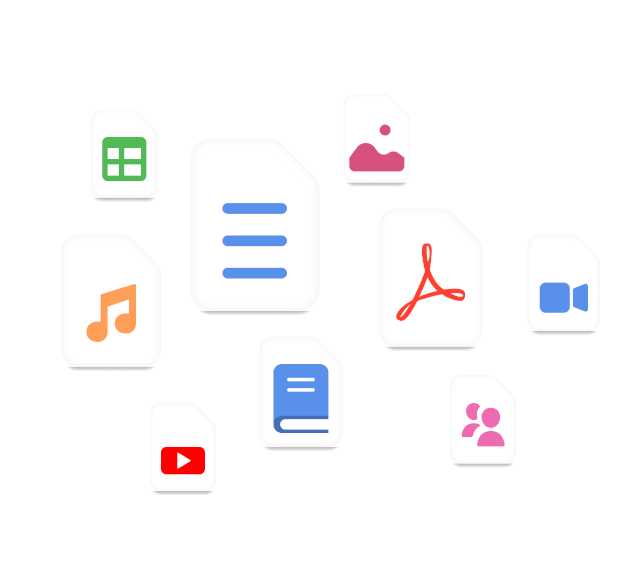
MAXQDA works with a vast range of data formats. Text documents, Excel tables, PDFs, images, website data, audio or video recordings, SPSS files, bibliographic records, focus group discussions, email – even YouTube comments – you can analyze it all.
TRANSCRIBE AND ANALYZE
Get the most out of your data
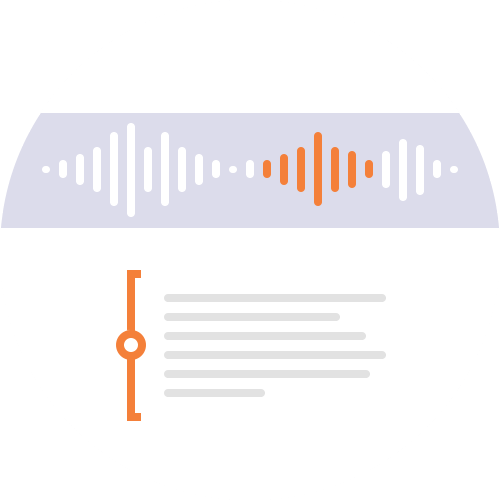
Use MAXQDA Transcription to automatically transcribe your audio and video recordings. Alternatively, you can use MAXQDA’s built-in tools for manual transcription. Of course, you can also import transcripts you have created in a separate program and link your transcripts to the original media file. Or code and analyze your media file as it is – even without transcribing it before.
Artificial Intelligence
AI Assist: Qualitative data analysis meets AI
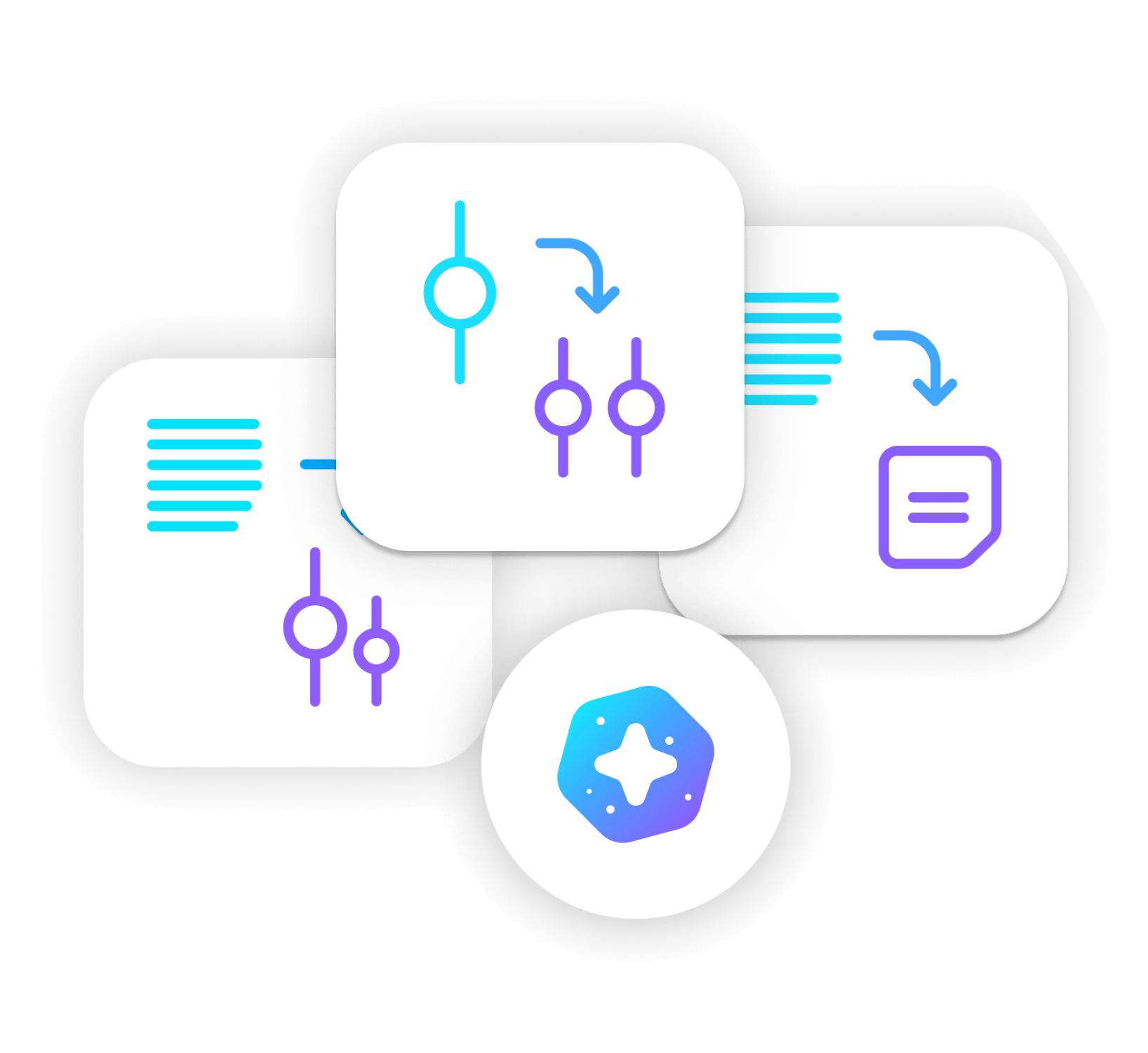
AI Assist – your virtual research assistant – simplifies your work by automatically analyzing and summarizing elements of your research project. With AI Assist you can automatically paraphrase documents, chat with you documents, let AI suggest coded segments for a code, and generate subcode suggestions based on coded text segments. No matter which AI tool you use – you can customize your results to suit your needs.
NOTE AND SUMMARIZE
Get an overview
Write notes while you work and attach them anywhere – to documents, to codes, or to the data itself. Summarize the most important data points or paraphrase them to develop a coding system. With the Memo Manager, Summary Grids and Summary Tables you will never lose track of your progress.

VISUALIZE
Understand how things connect
Visualize the progression of an interview, compare documents, or use concept maps to visualize connections. Identify patterns and relationships, present, and further explore your data.
PUBLISH
Share your research with the world
Easily generate and customize a report with MAXQDA’s Smart Publisher and export to many formats. Quickly collect outputs and conclusions on different topics at all stages with Questions, Themes & Theories.